
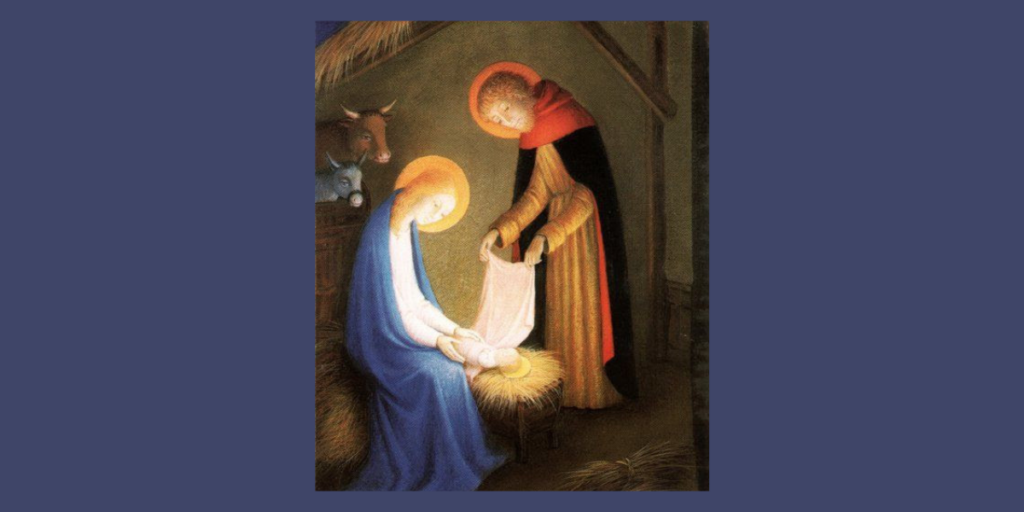
Between the Crib and the Cry of the Innocents
A Reflection from Laura Strietmann, Cincinnati Right to Life — 2025
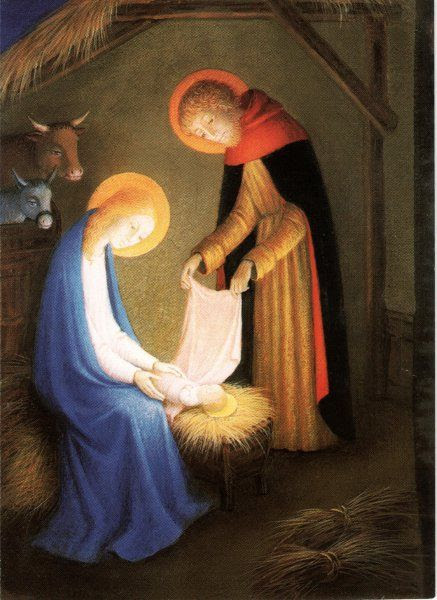
Each year, the Church draws us into a profound and unsettling movement of grace—from the radiant joy of Christ’s birth on December 25 to the deep sorrow of the slaughter of the Holy Innocents on December 28. In 2025, this tension feels more real than ever before.
God chose to enter history not with force, but as a newborn baby, hidden in the arms of His Mother. Before He ever spoke a word, His presence was proclaimed by another child not yet born. When Mary greeted Elizabeth, the preborn John the Baptist leapt for joy in his mother’s womb. Even before birth, John recognized Christ. Even before birth, life testified to Life.
This moment reveals an eternal truth the world has always resisted: every human life, from its very beginning, is capable of encountering God, responding to grace, and bearing witness to truth.
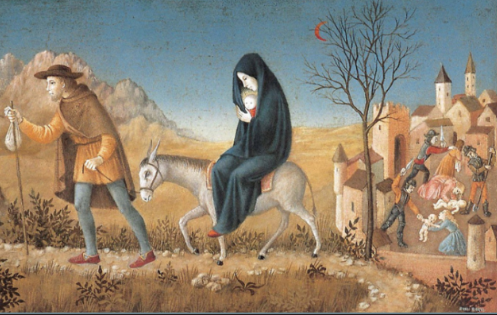
Yet almost immediately, the Church turns our gaze from this truthful joy to tragedy. Just days after Christmas, we commemorate the Holy Innocents—children murdered by Herod in his fear and hunger for power. These children never spoke a word, yet the Church honors them as martyrs. Their blood cries out across the centuries, reminding us that when innocent life is rejected, violence is unleashed.
The closeness of these feasts is not accidental. Christmas joy and the cry of the innocents stand side by side—just as they do in our own time.
In 2025, Cincinnati Right to Life moved our offices to a location less than two blocks from one of the Midwest’s busiest facilities where preborn children are killed. On a daily basis, our sidewalk advocates stand witness. Hundreds of cars enter the facility of death each week, carrying mothers, families, and friends into what is promised as a solution but more often becomes a place of irreversible loss.
There are moments when the weight of this is overwhelming. Standing so close, it feels as though we are witnessing a modern echo of history’s darkest chapters—times when death and injustice were organized, sanitized, and carried out in plain sight. Like the smoke that once rose from Auschwitz, or the slave pens and riverfront blocks along the Ohio River where bounty hunters captured and returned enslaved people from free Ohio to the South, this reality confronts us daily with the devastating consequences of dehumanization and the grave cost of deciding that some lives are disposable.
And yet—hope endures.
Hope endures with every mother who turns away.
Hope endures with every child saved.
Hope endures in every loving conversation, every honest word spoken, every moment when truth is offered with compassion to those entering what has become a business of severe sorrow and REAL evil.
We stand on those sidewalks not in judgment, but in witness. We stand because a newborn baby once changed everything. We stand because a preborn child once leapt for joy at the presence of Christ. And we stand because the innocent—then and now—are worthy of protection, love, and sacrifice.
So much has changed in 2025. And yet, so much has remained the same.
Fear still drives the powerful to destroy the innocent. Mothers are still pressured and misled. Children are still targeted because they are small, unseen, and defenseless. But this truth has not changed: God still enters the world through vulnerable human life, and He still calls His people to defend it. We live between the crib and the cry of the innocents—between Christmas joy and profound sorrow. And it is precisely there, in that tension, that the Gospel calls us to remain.
Christ is born.
Life is sacred.
And the innocent must be protected.